
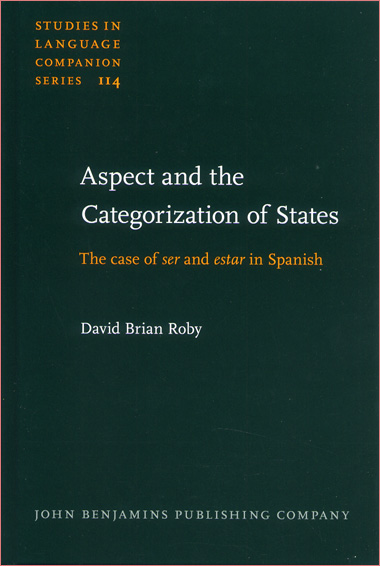
Aspect and the Categorization of States: The case of ser and estar in Spanish ∥ Roby, David Brian
-----------------------------------
ISBN13: 9789027205810
-----------------------------------
サイズ: 16.5 x 24.5 x 2 cm
-----------------------------------
頁 数: xiii+191 pgs.
-----------------------------------
装 丁: hard cover
-----------------------------------
出版社: John Benjamins
-----------------------------------
発行年: 2009
-----------------------------------
発行地: Amsterdam
-----------------------------------
双書名: Studies in Language Companion Series, 114
追加情報: ※ 詳細PDFリンク
本書はスペイン語の二つのコピュラ動詞 ser と estar を、従来の語彙的・語用的説明ではなく「アスペクト的形態素」として再分析することで、状態の分類と文法的対立を統一的に説明しようとする研究書です。両動詞の対立が、スペイン語の過去時制に見られる完了性の対立([±perfective])と同一の普遍的アスペクト値に基づくと主張し、状態も出来事と同様にアスペクト構成によって類型化できることを示します。さらに、アスペクトが出来事には内部的に、状態には外部的に作用するという分析を通して、従来説明が難しかった ser/estar の意味差や用法の揺れを理論的に整理しています。理論的背景、従来研究の批判的検討、談話基盤の解釈の再評価、アスペクト構成とコピュラ選択の関係などが体系的に論じられ、専門研究者だけでなく初学者にも理解しやすい明快な記述が特徴です。スペイン語のコピュラ研究、アスペクト論、意味論・統語論の交差領域に新たな視座を提供する一冊です。
[対象地域、研究分野]
スペイン語圏/言語学・意味論・統語論・アスペクト研究を対象とし、スペイン語コピュラ研究者・意味論研究者・第二言語習得研究者を対象としています。
※ タイトルページ、目次、プロローグなどは「追加情報」のPDFをご参照下さい。
Description:
In this work, the Spanish copulae ser and estar are argued to be aspectual morphemes. Their binary opposition reflects the universal aspectual values [±Perfective], which are the same ones overtly expressed by the preterite and imperfect past tense forms in Spanish. It can therefore be shown that different types of states, just like different types of events, can be categorized based on their aspectual composition. Additionally, the inherent semantic differences between events and states can be accounted for by analyzing aspect as applying to events internally and to states externally.
A useful resource for the beginning linguist as well as the most seasoned analyst, this work is written in language that is easy to understand while remaining faithful to all of the appropriate relevant technical terminology. Anyone who is seriously interested in exploring why the Spanish verbs ser and estar are used the way they are should read this book.
Table of contents
Abbreviations…..ix
Preface…….xi-xii
Introduction…..xiii
Chapter 1. Theoreticcal premises and background data……1-10
Chapter 2. Common interpretations of ser and estar……11-31
Chapter 3. Other theoretical developments…..33-59
Chapter 4. Critical assessement of a discourse-based interpretation…..61-89
Chapter 5. Aspectual composition and ser and estar……91-118
Chapter 6. Aspectual distinction in Spanish copular predication…..119-162
Chapter 7. Conclusions……163-181
Refreences…..183-185
Subject index…..187-191
-
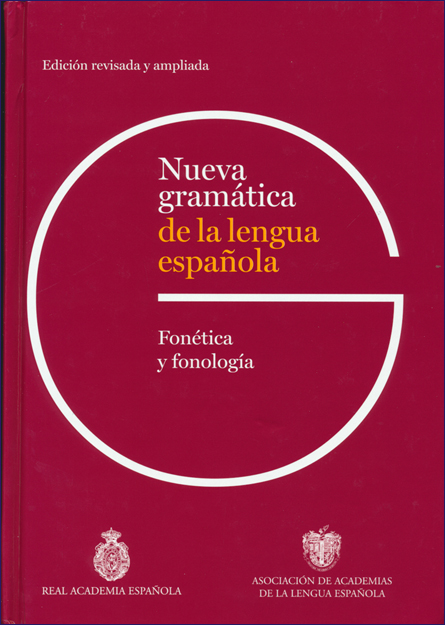
RAE(スペイン王立アカデミー)とASALE(スペイン語アカデミー協会)が共同編集した改定新版「アカデミア最新スペイン語文法」シリーズ(既刊3巻)。2025年10月に刊行された本書は、その第4巻(最終巻)です。 2011年版の 555頁から 新版は 700頁余と大幅に改訂増補 !!
※ スペイン語の音声を体系的に理解するための資料として、研究者、教育関係者、上級学習者に不可欠であり、大学図書館・研究室にも必須の一冊です。
※ 大幅な改訂と更新: 旧版以降に進んだ最新の研究成果、特に言語の「バリエーション」に関する知見を全面的に反映。技術の進歩を活用し、内容の理解を助けるための工夫が凝らされています。
※ 具体的な革新点: 知覚音声学への配慮、第1章の全面的な書き直し、イントネーションを扱う第10章の大幅な改訂、QRコードによる発音サンプルの導入、補足的な参考文献の追加など。- Nueva gramática de la lengua española: Fonética y fonologia ∥ R.A.E.
- ¥17,380
-

※ スペイン王立アカデミーとASALE(スペイン語アカデミー協会)が共同編纂した、スペイン語の語彙の歴史を包括的に記録する辞書。語源・形態・意味の変化を詳細に解説しています。
※ DHLE(スペイン語歴史辞典)プロジェクトは現代のデジタル技術と国際的な共同作業体制を駆使して進行中の画期的な取り組み。
※ 10巻本・合計2万ページ超となる今回の紙書籍版(印刷版)は本プロジェクトの記念碑的な出版物。図書館・研究室の重要資料として長期保存の価値が高い文献になります。今後の更新はデジタル版に移行する見込みで、今回の書籍版は将来入手困難になることが予想されます。
※ 全10巻のうち、第1~3巻は現在では入手困難な1960年~1996年版(a-apasanca、b-bajoca)の復刻版です。過去の貴重な学術的成果であり、一次史料としての価値が高いものです。
※ 第4~10巻は2005年以降に進められたデジタル版DHLEから代表的な項目を抜粋して構成。
収録内容はスペイン語語彙史研究の最新成果を反映し厳選されています。- Diccionario histórico de la lengua española. in 10 vols. ∥ R.A.E.
- ¥178,200
-
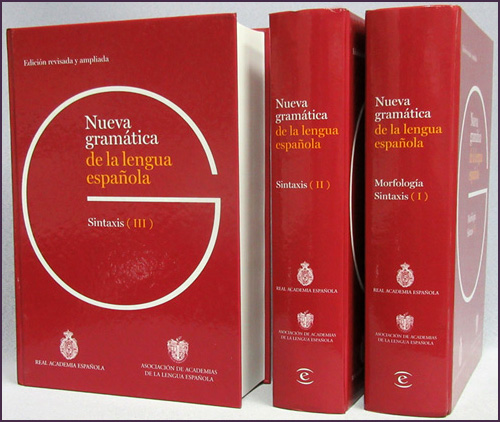
好評発売中!!
第2版 増補改訂版3巻本 「アカデミア最新スペイン語文法」。2009年に2巻本として出版されてから16年、さらに広く深く、スペイン語圏全体のスペイン語を総合的に扱うスペイン語文法書の決定版です!
本書はスペイン王立アカデミー(RAE)とASALE が共同で編纂した最新のスペイン語文法を、より精緻に再構成した改訂増補版であり、形態論から統語論に至るまで、スペイン語の構造を体系的かつ包括的に示す研究書です。従来版よりも内容説明が充実し、分析の明確化、現象の地理的・社会的分布に関する情報の拡充、さらに学習者・研究者双方に配慮した丁寧な解説が加えられています。全3巻・約5000頁に及ぶ大部の構成は、汎ヒスパニック的視点を重視し、スペイン語圏全体の多様性を踏まえた記述を特徴としています。記述文法と規範文法の両面を兼ね備え、学術研究・高度教育機関において必携の基礎資料となる一冊です。- Nueva gramática de la lengua española - Edicion revisada y ampliada in 3 vols. ∥ Real Academia Española
- ¥52,140