
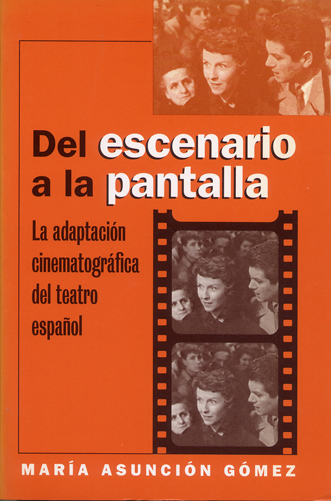
Del escenario a la pantalla: La adaptación cinematográfica del teatro español ∥ Gómez, Maria Asunción
-----------------------------------
ISBN13: 9780807892695
-----------------------------------
サイズ: 15 x 23 x 2 cm
-----------------------------------
頁 数: 231 pgs.
-----------------------------------
装 丁: paper cover
-----------------------------------
出版社: University of North Carolina Press
-----------------------------------
発行年: 2000
-----------------------------------
発行地: Chapel Hill
-----------------------------------
双書名: Romance Languages and Literatures, 265
-----------------------------------
書籍状態: 経年変化による軽度な表紙の変色
追加情報: ※ 詳細PDFリンク
本書は、演劇テクストとその映画化作品との関係というスペイン文化研究においてこれまで十分に扱われてこなかった主題を検討する研究書です。著者María Asunción Gómezは、Carlos Arniches、Ramón del Valle
Inclán、Federico García Lorca、Víctor Ruiz Iriarte、Antonio Buero Vallejo、Fernando Fernán Gómez、José Sanchis Sinisterraによる20世紀スペイン演劇作品が映画化される過程における形式とイデオロギーの転位を分析します。取り上げられる論点は、スペインにおける映画と演劇の関係史的概観、両メディアを規定する原理の比較研究、自己言及性やメタテクスト的戦略の使用、フランコ体制期や体制後といった現代スペイン史の重要な局面におけるイデオロギーの転位、さらに女性主体の構築、権力構造とジェンダー差異との関係、選ばれた映画化作品における女性の見世物化・商品化の表象に及びます。ロルカ『血の婚礼』、サンチス・シニステルラ『さらば、カルメラ!』などの具体的な作品分析を通じて、演劇と映画というジャンルを横断する視座を提示しています。(SBC: 146398)
[対象地域、年代、研究分野]
スペインを対象地域とし、20世紀(フランコ体制期およびポスト・フランコ期を含む)の演劇・映画を扱う研究であり、演劇学、映画研究、翻案理論、ジェンダー研究の分野に位置づけられます。演劇学・映画研究の研究者をはじめ、翻案理論、スペイン現代史、ジェンダー表象研究に関心を持つ人文学研究者を対象としています。
※ タイトルページ、目次、プロローグなどは「追加情報」のPDFをご参照下さい。
Description:
Written in Spanish, this book explores an understudied aspect of Hispanic culture: the relationship between dramatic texts and their cinematic adaptations. It examines the transposition of form and ideology in cinematic versions of twentieth-century Spanish plays by Carlos Arniches, Ramón del Valle Inclán, Federico Garcia Lorca, Victor Ruiz Iriarte, Antonio Buero Vallejo, Fernando Fernán Gómez, and José Sanchis Sinisterra.
The matters addressed include a historic overview of the relationship between cinema and theater in Spain, a comparative study of the principles governing these two media, the use of self-reflexivity and metatextual strategies, and the transposition of ideology during critical periods of modern Spanish history, as well as the construction of the female subject, the relationship between power structures and gender difference, and the representation of woman as a spectacle/commodity in selected film adaptations of Spanish plays.
INDICE:
Ilustraciones......9
Agradecimientos......13
Introduccion......15
I. La relacion teatro/cine en España: una perspectiva historica......19
Interrelacion teatro/cine mudo: ¿Cooperacion o competencia?......23
Primeras adaptaciones del cine sonoro......32
El teatro y el cine en la España franquista......34
La adaptacion en el cine postfranquista......42
II. La dinamica de la adaptacion: De la teoria a la practica......49
Definicion......50
Viejos prejuicios y concepto de realidad......51
Semejanzas paradojicas entre teatro y cine......54
Las modalidades psicologicas de la recepcion y el concepto de presencia......55
El punto de vista y la ilusion de realidad en teatro y en cine......59
Espacio dramatico y espacio filmico......61
Accion y personajes......65
Elementos extratextuales......67
III. Metatextualidad en el teatro y el cine......68
La ceremonia de los espejos: La adaptacion cinematografica de Bodas de sangre de Federico Garcia Lorca y Carlos Saura......71
En la Encrucijada de la realidad y el deso: La adaptacion cinematografica de ¡Ay, Carmela! de Jose Sanchis Sinisterra y Carlos Saura......89
IV. La (trans)posicion y (trans)formacion de una ideologia......109
Del moralismo regeneracionista a la critica sociopolitica: La señorita de Travelez de Carlos Arniches y Calle Mayor de Juan Antonio Bardem......109
Dos reflexiones sobre el poder y la modernidad: Un soñador para un pueblo de Antonio Buevo Vallejo y Esquilache de Josefina Molina......121
V. La construccion del sujeto femenino en el escenario y la pantalla......140
Estructuras de poder y diferencia sexual en la guerra civil española......144
Las bicicletas son para el verano de Fernando Fernan Gomez y Jaime Chavarri......146
¡Ay, Carmela! de Jose Sanchis Sinisterra y Carlos Saura......157
La mirada masculina y la mujer como espectaculo......161
Divinas palabras de Ramon del Valle-Inclan y Jose Luis Garcia Sanchez......164
La guerra empieza en Cuba de Victor Ruiz Iriarte y Manuel Mur-Oti......180
Conclusiones......190
Apendices......198
Obras citadas......218
Indice de adaptaciones......225
-
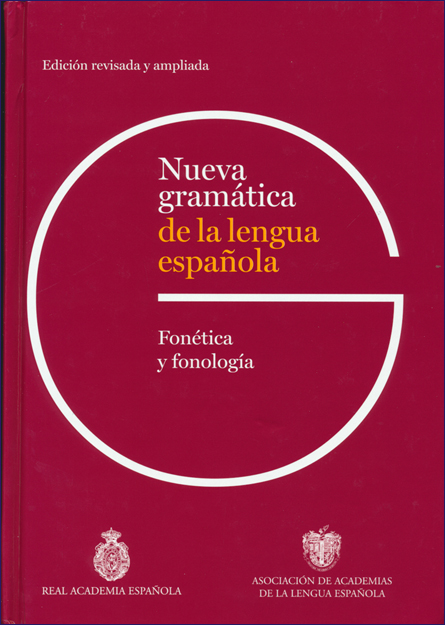
RAE(スペイン王立アカデミー)とASALE(スペイン語アカデミー協会)が共同編集した改定新版「アカデミア最新スペイン語文法」シリーズ(既刊3巻)。2025年10月に刊行された本書は、その第4巻(最終巻)です。 2011年版の 555頁から 新版は 700頁余と大幅に改訂増補 !!
※ スペイン語の音声を体系的に理解するための資料として、研究者、教育関係者、上級学習者に不可欠であり、大学図書館・研究室にも必須の一冊です。
※ 大幅な改訂と更新: 旧版以降に進んだ最新の研究成果、特に言語の「バリエーション」に関する知見を全面的に反映。技術の進歩を活用し、内容の理解を助けるための工夫が凝らされています。
※ 具体的な革新点: 知覚音声学への配慮、第1章の全面的な書き直し、イントネーションを扱う第10章の大幅な改訂、QRコードによる発音サンプルの導入、補足的な参考文献の追加など。- Nueva gramática de la lengua española: Fonética y fonologia ∥ R.A.E.
- ¥17,380
-

※ スペイン王立アカデミーとASALE(スペイン語アカデミー協会)が共同編纂した、スペイン語の語彙の歴史を包括的に記録する辞書。語源・形態・意味の変化を詳細に解説しています。
※ DHLE(スペイン語歴史辞典)プロジェクトは現代のデジタル技術と国際的な共同作業体制を駆使して進行中の画期的な取り組み。
※ 10巻本・合計2万ページ超となる今回の紙書籍版(印刷版)は本プロジェクトの記念碑的な出版物。図書館・研究室の重要資料として長期保存の価値が高い文献になります。今後の更新はデジタル版に移行する見込みで、今回の書籍版は将来入手困難になることが予想されます。
※ 全10巻のうち、第1~3巻は現在では入手困難な1960年~1996年版(a-apasanca、b-bajoca)の復刻版です。過去の貴重な学術的成果であり、一次史料としての価値が高いものです。
※ 第4~10巻は2005年以降に進められたデジタル版DHLEから代表的な項目を抜粋して構成。
収録内容はスペイン語語彙史研究の最新成果を反映し厳選されています。- Diccionario histórico de la lengua española. in 10 vols. ∥ R.A.E.
- ¥178,200
-
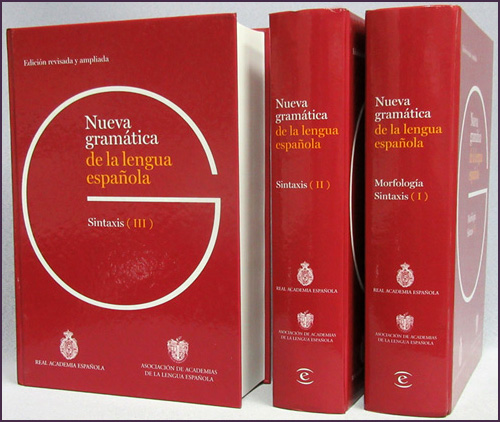
好評発売中!!
第2版 増補改訂版3巻本 「アカデミア最新スペイン語文法」。2009年に2巻本として出版されてから16年、さらに広く深く、スペイン語圏全体のスペイン語を総合的に扱うスペイン語文法書の決定版です!
本書はスペイン王立アカデミー(RAE)とASALE が共同で編纂した最新のスペイン語文法を、より精緻に再構成した改訂増補版であり、形態論から統語論に至るまで、スペイン語の構造を体系的かつ包括的に示す研究書です。従来版よりも内容説明が充実し、分析の明確化、現象の地理的・社会的分布に関する情報の拡充、さらに学習者・研究者双方に配慮した丁寧な解説が加えられています。全3巻・約5000頁に及ぶ大部の構成は、汎ヒスパニック的視点を重視し、スペイン語圏全体の多様性を踏まえた記述を特徴としています。記述文法と規範文法の両面を兼ね備え、学術研究・高度教育機関において必携の基礎資料となる一冊です。- Nueva gramática de la lengua española - Edicion revisada y ampliada in 3 vols. ∥ Real Academia Española
- ¥52,140